 Fresh
Fresh Building a Daily Routine Around The Home As A Health Environment
When the home as a health environment becomes part of your routine, it stops relying on motivation. The focus is on habits you can actually keep, not a short-lived push. Here is a grounded, practical look at the home as a health environment that fits into a real, busy life.
Why routines beat willpower
Air quality, damp, mould, and noise have measurable effects on respiratory health and sleep and are frequently tolerated far longer than they should be.
Anchoring a new habit
Put simply, finally, a home should contain somewhere to be still. Not a project, not a screen, not a place associated with work. Somewhere with a chair, a window, and nothing that demands anything. Most homes have been optimised for entertainment and storage. Very few have been arranged for rest, which is what they are principally for.
A simple morning version
A home is where the majority of sleeping, a good deal of eating, and much of the recovering happens. Its arrangement therefore exerts a continuous influence that no weekly intervention matches.
A simple evening version
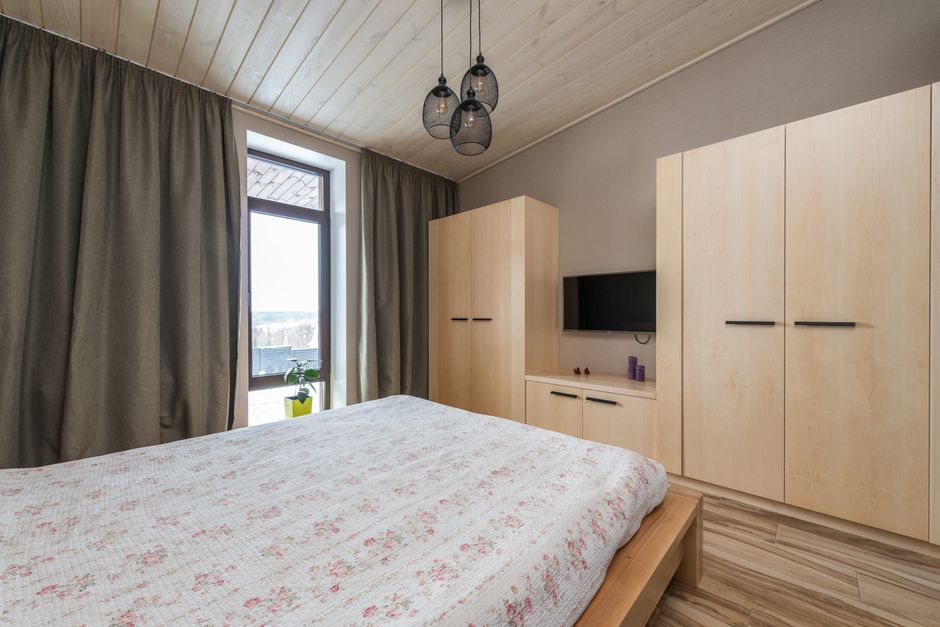
Sleep first. A bedroom that is dark, quiet, and slightly cool supports the physiology of sleep more effectively than any technique practised in a bright, warm one. Removing the phone removes both the light and the temptation. Reserving the bed for sleep strengthens the association between the two.
It helps to focus on what you can realistically do most days, rather than an ideal you can only manage occasionally. For evidence-based detail, MedlinePlus (National Institutes of Health) offers helpful guidance.
Handling the days it slips
It helps to remember that the kitchen determines much of what is eaten, largely through visibility and effort. What is on the counter gets eaten. What requires ten minutes of preparation gets eaten less than what requires none. Stocking the things that are useful — frozen vegetables, tinned pulses, eggs, oats — and not stocking the things that are eaten only because they are present is more effective than any resolution about self-control. For a closer look, see nerve alive.
The goal is progress you can maintain, not perfection you have to chase and eventually abandon.
Letting it become automatic
Light through the day matters. Working near a window, opening curtains early, and keeping the evening dim aligns with the body's own signalling.
Why routines beat willpower
It helps to remember that space for movement need not be a gym. A clear patch of floor, a chin-up bar in a doorway, or a bag of something heavy is enough to make a five-minute intervention possible on a day when leaving is not.
The practical takeaway is to keep the home as a health environment simple enough that it survives a busy week, not just a good one.
Practical tips
Some practical points to keep in mind:
- Start small and stay consistent rather than aiming for a dramatic change.
- Notice what works for you personally, since everyone responds a little differently.
- Keep the useful option easy to reach and the tempting one a little harder.
- Aim for good enough on busy days instead of skipping entirely.
The bottom line
The best approach is the one you can keep going with. Take it one small step at a time. Consistency, not intensity, is what makes the difference in the long run.
Frequently asked questions
How long before I notice a difference?
It varies from person to person. Give any new habit a few weeks of consistency before deciding whether it is working for you.
Do I need special equipment or money?
No. Most of what helps is free or low-cost, and the simplest options are usually the ones people stick with.
Is this relevant if I'm just starting out?
Yes. You can begin with one small change and build from there. With the home as a health environment, steady progress beats trying to do everything at once.
Is this suitable for busy people?
Yes. Most of the ideas here fold into things you already do each day, so they take little extra time.